Cleveland · Cuyahoga County · Lake Erie Snow Belt
The lake decides
when your roof
gets tested.
A stain on the ceiling, a roof that's simply run out of years, an inspector's report, or the morning after a storm — whatever brings you here, the job is the same: find what's actually wrong, say whether it needs a repair or a replacement, and put it in writing.
Start here
What brings you here?
Also here for animals in the roof, a fallen limb, a failed skylight, or a chimney that's been leaking for years? Those are all us. Tell us what you're seeing →
Ice-dam season runs December through February in Cuyahoga County. Attic and ventilation fixes are cheapest to do before the first hard freeze — not during it.
Fig. I · Why Cleveland roofs fail early
Age is half of it. Weather is the other half.
Roofs everywhere wear out. Cleveland roofs wear out faster, and they fail in specific places — because a roof in a mild climate ages slowly and predictably, while a Cleveland roof gets snow load, then a thaw, then a hard refreeze, sometimes inside the same week.
Every cycle drives water into a seam, expands it as ice, and opens it a little wider. That's why the failure points here are rarely the middle of a shingle field. They're the places where two materials meet — chimney flashing, valleys, plumbing boots, the eave where the ice builds. Add sustained wind off the lake lifting shingle tabs on the exposed north and west planes, and you get roofs that look fine from the driveway and leak anyway.
Which is the whole reason an inspection matters more here than the estimate does. Anyone can quote a number for a new roof. Finding the one flashing detail that's been letting water in for two winters takes getting on the roof and into the attic.
- Flashing and penetrations — chimneys, vents, skylights: the most common true source of a leak
- Eaves and ice dams — water backing up under shingles, which no amount of surface repair fixes
- Wind-lifted tabs — often on one plane only, invisible from the ground
- Valleys — where two roof planes concentrate every gallon that lands on them
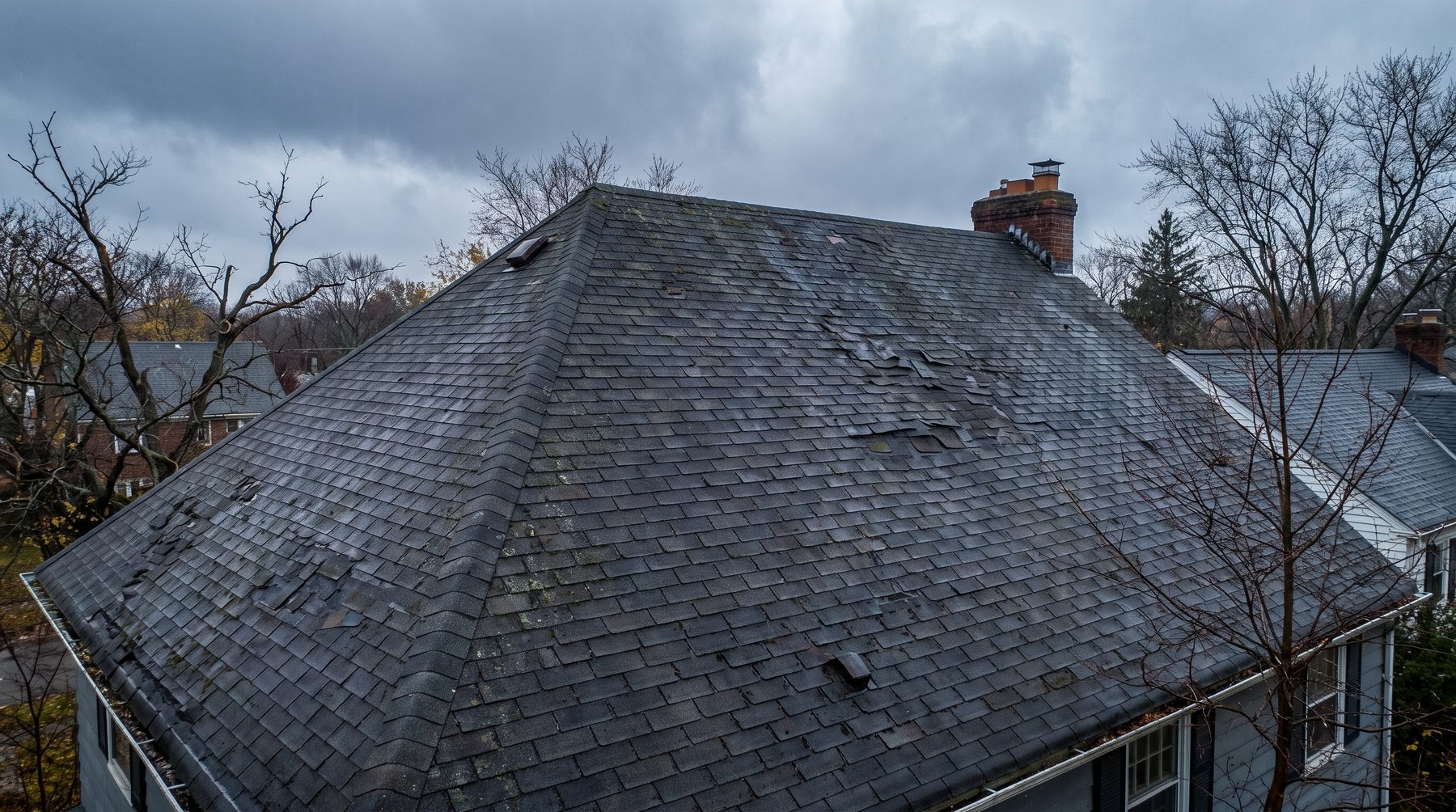
Fig. II · The storm ledger
What actually breaks roofs here
Cleveland's roof damage isn't spread evenly through the year. It arrives in events. These are the four that produce the calls — and what each one does to a roof.
General guidance for the Cleveland metro. Timing shifts year to year; the pattern doesn't.
Fig. III · The work
What we do
Repair-first, and honest when it isn't repairable. If what you have needs replacing, we'll say so — and if it doesn't, we won't sell you one.
Roof Leak Repair
Finding the actual entry point, which is often nowhere near the stain on your ceiling. Attic inspection, roof inspection, then a repair that addresses the source rather than the symptom.
Leak repair →Storm & Wind Damage
Post-event inspection with photo documentation of every damaged plane — the record you'll need if you file a claim, and the honest read on whether you should.
Storm damage →Ice Dam Remediation
Safe removal now, and a fix for the cause — because ice dams are an attic insulation and ventilation problem wearing a roof problem's clothes.
Ice dams →Flashing & Chimney
The most common true source of a Cleveland roof leak. Chimney counter-flashing, step flashing, valleys, vent boots and skylight curbs rebuilt properly.
Flashing work →Emergency Tarping
Water coming in tonight gets stopped tonight. Tarping buys the time to do the real repair right instead of in the dark and the rain.
Call now →Inspection & Written Findings
Buying a house, selling one, or just want to know what you've got. Photographs, condition by plane, remaining life, and what needs attention first.
Book an inspection →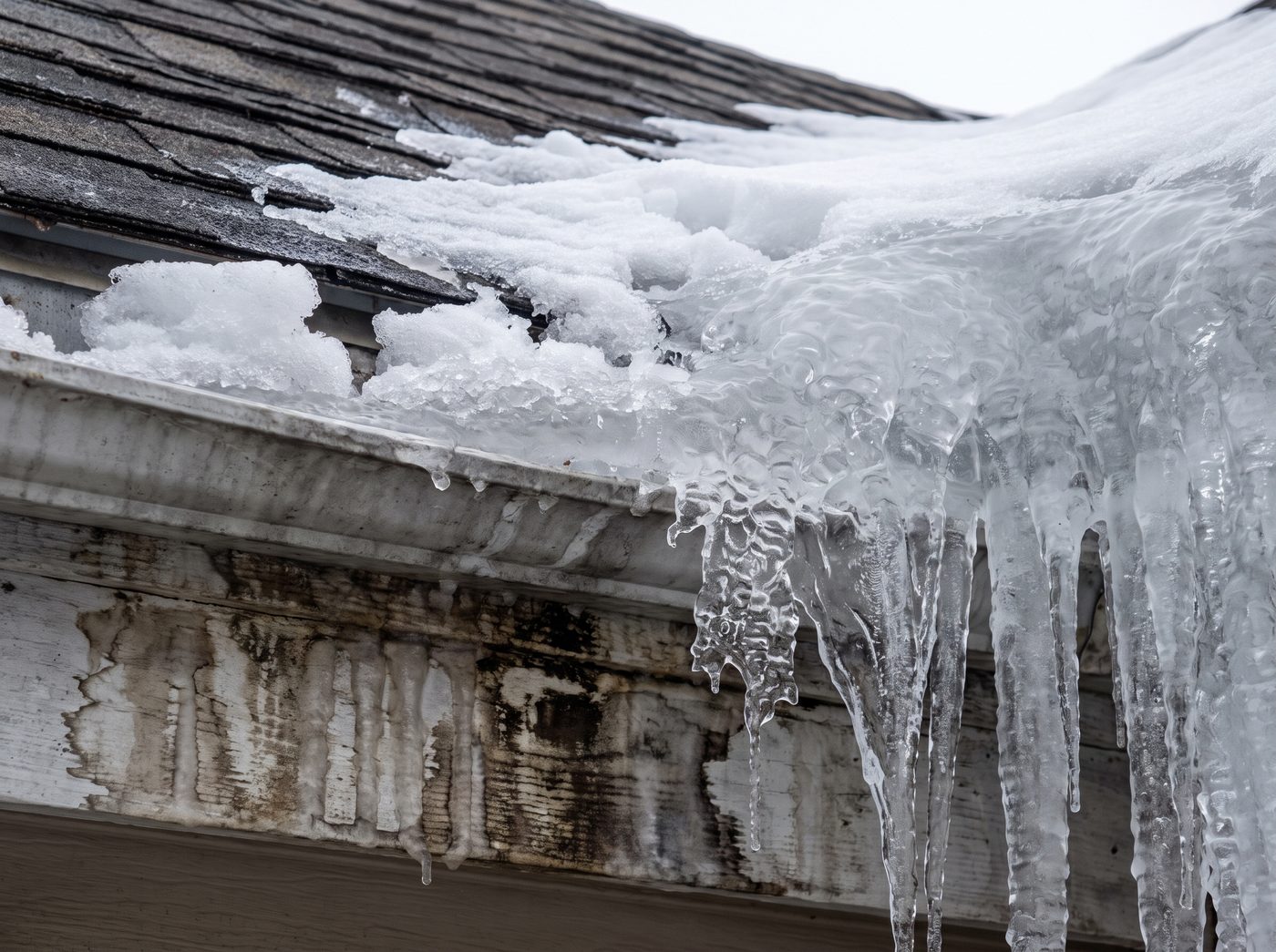
Fig. IV · The Cleveland special
Ice dams are not a roof problem
They look like one. They leak like one. But an ice dam is caused by warm air escaping into your attic — and that means the roof is where you notice it, not where it starts.
Here's the sequence: heat leaks into the attic and warms the deck. Snow on the upper roof melts even though it's below freezing outside. That water runs down to the eave, which is cold because there's no heated space beneath it, and refreezes. Do that for a few days and you have a ridge of ice with meltwater pooling behind it — sitting on top of shingles that were designed to shed water flowing down, not to hold water standing still.
Which is why chipping the ice off, or running heat cable, or replacing shingles solves nothing come next December. The fix is air sealing and ventilation, and it is usually cheaper than the repeat repairs.
Do not let anyone attack an ice dam with a hammer, an axe, or a pressure washer. It's a fast way to turn a water problem into a torn-shingle problem, and we've been called to fix exactly that more than once.
Fig. V · Schedule of rates
What roof repair costs in Cleveland
Most roofing companies won't publish a number. Here's what this work actually runs in the Cleveland metro, so you can sanity-check any quote you're holding — including ours.
| Job | Typical range |
|---|---|
| Roof inspection with written findings | $0 – $250 |
| Minor leak or flashing repair | $350 – $900 |
| Shingle replacement, single plane | $600 – $1,800 |
| Chimney flashing rebuild | $700 – $2,200 |
| Ice dam remediation (removal + cause) | $500 – $1,500 |
| Emergency tarping | $400 – $800 |
| Full replacement, typical Cleveland home | $9,000 – $22,000 |
Pitch, access, roof size, layers of existing shingle, and how long water has been getting in all move the number. An inspection turns the range into a firm figure.
Why two quotes for "the same roof" differ by thousands
Usually it's scope, not price. One company is quoting a repair to the failed detail; the other is quoting a full tear-off. Both may be defensible — but you can't compare them until you know which one you're reading. That's what the written findings are for.
Storm-chaser warning. After every major Cleveland wind event, out-of-state crews work the neighborhoods door to door. Signs to walk away: pressure to sign before an inspection, an offer to "cover your deductible" (that's insurance fraud in Ohio), no local address, and no written scope of work. A real contractor will still be reachable next winter.
Request an inspection
Tell us what you're seeing. We'll call you back — usually within the hour during working hours.
Or call (216) 208-8179 — an active leak is always a same-day call.
Fig. VI · The question everyone asks
Will insurance pay for it?
The short version: insurance covers sudden damage. It does not cover wear. Everything else is detail — but the detail is where claims get denied.
A limb through the roof in a March windstorm is a claim. Twenty-year-old shingles that have finally given up are maintenance, and no carrier in Ohio will pay for them. The grey zone is wind and hail, where the argument is whether the damage is new and event-caused or the accumulation of many seasons — which is precisely why dated photographs and a written inspection matter so much.
One Cleveland-specific thing worth knowing before you file: most Ohio policies carry a separate wind and hail deductible, often 1–2% of your dwelling coverage rather than a flat dollar amount. On a $300,000 home that's $3,000–$6,000 — which means a $1,200 repair is entirely yours regardless, and filing a claim you'll never collect on can still show up on your record.
We'll tell you honestly which side of that line we think you're on. What we won't do is inflate a scope to make a claim work, or offer to absorb your deductible — that's fraud in Ohio, and any contractor offering it is telling you exactly how they do business.
How claims actually work →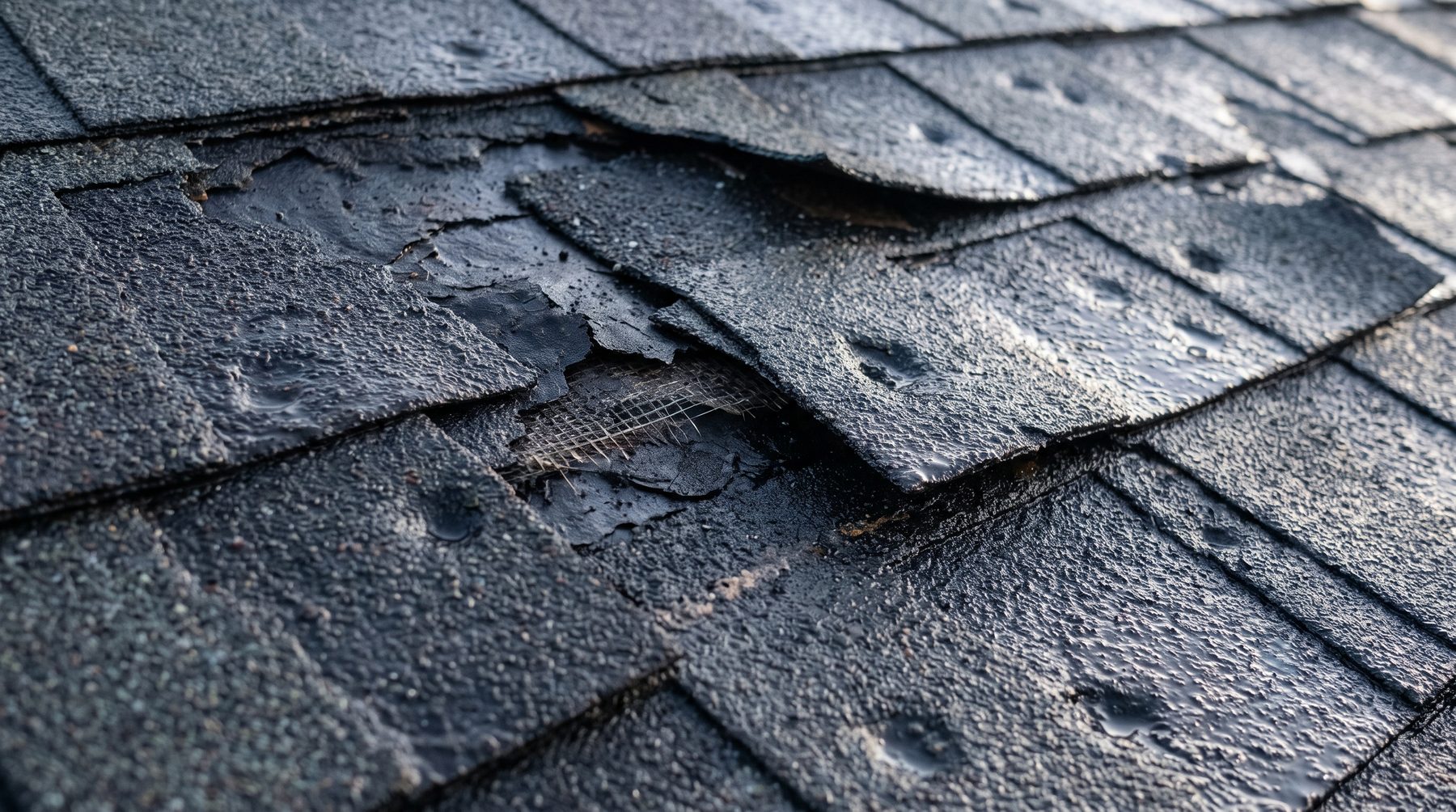
Fig. VII · Coverage
Both sides of the Cuyahoga
Fig. VIII · Straight answers
Questions we get every week
Does homeowners insurance pay for roof repairs?
Usually yes for sudden damage — wind, hail, a fallen limb. Usually no for age and wear, which carriers treat as maintenance. Most Ohio policies also carry a separate wind and hail deductible of 1–2% of dwelling coverage, so smaller repairs often fall entirely inside it. We'll give you an honest read before you file.
Can you repair a roof instead of replacing it?
Frequently, yes — and we'd rather. If the shingles still have flexibility and granule cover and the damage is confined to one plane or one flashing detail, a repair is the right answer and buys real years. Replacement becomes honest when shingles are brittle, granule loss is widespread, or there are leaks across several planes.
How long does a roof last in Cleveland?
Less than the package says. A shingle rated for 30 years in a mild climate commonly gives 18–25 here, because freeze-thaw cycling and lake wind are harder on materials than sun alone. North and west-facing planes usually go first.
There's a stain on my ceiling but no active drip. Is that urgent?
It's worth looking at soon. A stain means water has been getting in — the absence of a drip today usually means it's currently frozen, or it's soaking into insulation instead of running through. Both get worse and neither fixes itself.
Someone knocked on my door after the storm. Should I use them?
Be careful. After major Cleveland wind events, out-of-state crews canvass neighborhoods. Anyone pressuring you to sign before an inspection, promising to "cover your deductible," or unable to give you a local address is telling you something. Get a written scope and a second opinion — the roof will still be there tomorrow.
Do you work in winter?
Yes — winter is when Cleveland roofs actually fail, so that's when this work matters most. Some repairs are temperature-dependent and get staged: stop the water now, complete the permanent repair when conditions allow. We'll tell you which one you're getting.
Find out what's actually wrong
before winter does
An inspection gets you photographs, a plane-by-plane condition report, an honest repair-or-replace answer, and a firm price. No pressure, no scare tactics.